Saturday, April 21, 2007

CD REVIEW: Dale Watson's "From the Cradle to the Grave"

Label: Hyena Records

The story behind the album is already old news to the fans of underground country music. And it’s quite the tale. Lone Star troubadour Dale Watson is invited to a Tennessee cabin by his Hollywood friend Johnny Knoxville to record a new album. Oh, and the cabin? It was previously owned by the Man in Black, the one and only Johnny Cash. How could Watson say no to the prospect of recording in the home of one of his biggest heroes? Well… he couldn’t, and the product of this story will be released on April 24th. On this day, From the Cradle to the Grave, his first release on Hyena Records, will be delivered to fans that have eagerly awaited this album for months. And guess what folks? As usual, Dale Watson does not disappoint.

When Watson agreed to do the album, he stated that he did not want to record an entire album of songs that sounded like Johnny Cash. Still, he could not deny his presence during the recording sessions, and his presence is also very much a part of the album. Tales of love, death, and murder make up the majority of the record, resulting in perhaps Watson’s darkest album to date. Often, Cash’s signature sound is there too. That familiar shuffle is especially present on the title track, which ends with some of the best lyrics of his career. “All we really are are the memories that we’ve made and leave behind from the cradle to the grave.” How’s that for philosophical wisdom? It’s also present on “Justice for All,” the album’s first single. In this highly emotional story of a father filled with rage towards the man who killed his child, Watson states that even though he knows “an eye for an eye will leave the whole world blind, that’d he gun the bastard down if he had the chance.” Cash would be proud, and he’d be a fan of the tale of a murderous lover’s date with Alabama’s electric chair, “Yellow Mama,” as well. Finally, the album ends with probably the greatest tribute song ever written for the Man in Black. “Runaway Train,” with its speeding locomotive musical pace, describes Cash perfectly. All four songs are standouts, and in a perfect world, all would be country radio hits. Forty years ago, they would have been.

However, Cash’s sound is not the only one present on From the Cradle to the Grave. Watson and his always-outstanding band, The Lone Stars, also deliver to us hints of Waylon Jennings. “It’s Not Over Now,” a song about a man who simply cannot put his past love behind him, sounds very much like one of ‘ol Waymore’s blues. Watson also teamed with Chuck Mead (of BR549 fame) and Chris Scruggs to write “You Always Get What You Always Got.” A musical “you get what you deserve” message, it makes one wish that Mead and Watson would work together more often. BR549’s sound is ALL over this one, and folks, it’s a sound that fits Watson very well. Without a doubt, it’s an album highlight.

Despite these influences, the most recognizable sound on From the Cradle to the Grave is that of Watson himself. He and his band have created a sound over the past few years that is unique, combining the influence of Cash, Jennings, and Haggard with strong fiddle and steel guitar. A great example of this is “Time Without You,” a deceptively upbeat lament from a man who lost his love to the Lord. Again, a standout song. Another example is “Why Oh Why Live a Lie,” which finds him frustrated, trying to figure out why an ex-lover can’t be true to him, or even herself. Watson also shows his diversity with this fiddle and steel fused sound with “Tomorrow Never Comes.” In a musical sense, and perhaps a lyrical sense as well, this bluesy number is the album’s darkest track. With fiddle and steel playing eerie roles, and an outstanding guitar effect that resembles a bell’s toll, the song states that despite what false prophets say, no one knows when this world will end. No, this is no “album of Johnny Cash songs.” It’s a Dale Watson record, and a damn good one.

So no faults at all? Well, okay, so there is one minor flaw that keeps this record from being perfect. Even though it’s a great little upbeat country number, “Hollywood Hillbilly,” a tribute to Johnny Knoxville, just does not fit with the rest of the songs here. Yes, it was Knoxville who made this album possible, but the song itself would be much more at home on a previous Watson album, People I’ve Known, Places I’ve Been. In fact, it would be one of the best tracks on that record. It even would have fit on Whiskey or God, a hodgepodge album of Watson live show favorites. On the extremely dark From the Cradle to the Grave though, it just does not blend in well.

Still, this is extremely minor. One might even call it nitpicky, especially since this is Watson’s finest record in years. Recently, he stated that because of its mainstream demise, he was abandoning the “country” label in favor of a more fitting genre-moniker, “Ameripolitan,” a term he devised himself. Honestly, it does not matter what he wants to call his sound, because with or without a label, it’s incredible. Who cares what happens to mainstream country? As long as we have artists like Dale Watson releasing memorable albums like From the Cradle to the Grave, real music fans will be just fine. Somewhere, the Man in Black is smiling… and probably singing along.

To purchase this album, please visit Hyena Records' online store

To see the video for "Justice for All," click here

Friday, April 13, 2007

CD REVIEW: Robbie Fulks' "Revenge"

Label: Yep Roc Records

Over on an Amazon.com review, I saw Robbie Fulks referred to as “alt-country’s smartest smartass.” I absolutely love this because it is a perfect description of Fulks. Anyone who has experienced his music knows that his snarling sense of sarcastic humor is a highlight of all of his albums. So too is his brilliance. Fulks, who was given a scholarship to Columbia University (yes… the Ivy League Columbia University) out of high school, writes arguably the most intelligent country song of anyone in the underground scene. With Revenge, Robbie shows that this intelligence does not stop at songwriting. His 2007 double-live album is not only an excellent musical achievement. Like a musical essay, it has an introduction, two solid discs of music that represent different sides of the Fulks live experience, and a great conclusion, bringing everything together. It is truly a flawless package.

Disc 1 (entitled “Standing”) of Revenge finds Robbie Fulks performing with a full band. Needless to say, it rocks. One can tell that Fulks has been touring with this band for a long time because the sound is tight throughout the entire disc. The disc begins with the hilarious song/skit “We’re on the Road.” It just may be the most perfect intro to a live album ever made. Robbie jokingly introduces each member of the band as they are “driving to the next show.” However, a call comes in from the head of the record company. They want a new record, quickly, and are not willing to lend him much money to get it done. Fulks’ solution? Make a live album! One can’t help but chuckle, and the good times never stop as ten solid songs follow. Fans are treated to a great mix of outstanding renditions of Robbie’s past gems as well as three new numbers that are sure to please. Heartbreak never sounded so much fun as it does on these takes of “Goodbye, Good Lookin” and “Rock Bottom Pop.1.” The live versions of songs like “Mad at a Girl” and “Busy Not Crying” sound even better than their studio predecessors, and Robbie really pours his soul into his tribute to the classic country sound, “The Buck Starts Here.” The new songs are excellent too. “Fixin to Fall,” the tale of a poor sucker about to take the plunge into the land of roses and chocolates, would be a highlight on any of Fulks’ studio albums, and is a winner here as well. The depressing story of denial “You Don’t Mean It” is good, and the North Carolina celebration “Cigarette State” is even better. The latter track must be a live-show hit, and it is a perfect addition to this collection. It’s hillbilly madness at its best! Finally, the first disc of Revenge ends with its strongest rocker, a fine version of “Let’s Kill Saturday Night.” Obviously, Robbie Fulks knows what rockin’ country is supposed to sound like!

So that’s that, right? Great live album! Nope, kids, it gets even better. To only share a full-band set would be giving fans only one side of the Robbie Fulks live experience. Fulks also does stripped-down, “Unplugged” style acoustic shows, and thus, this side is represented on “Sitting,” disc two of Revenge. In many ways, this disc is even more interesting. Listeners are presented with three originals (two of them new), an outstanding set of covers, and some fun banter with the audience. The acoustic Fulks originals are great. The dark “In Bristol Town One Bright Day” sounds even bleaker here than on Couples in Trouble. It also sounds older, as though it could have been recorded decades ago. Think O Brother Where Art Thou. “On a Real Good Day” shows a man struggling to put on a happy face despite his depression. Finally, “I Like Being Left Alone” is classic Fulks. Yes, it’s comical on the surface, but a thick layer of sadness lies just below. It’s the kind of song that no one else could pull off as well. The covers are great too, including great renditions of “Bluebirds are Singing for Me” and “Away Out on the Old Saint Sabbath,” a duet with Kelly Hogan. We are even given a cover of Jimmie Logsdon’s odd-but-fun “I Wanna Be Mama’d,” which was also featured on Fulks’ cover record, 13 Hillbilly Giants. However, it is Fulks’ most unlikely cover that ends up being the highlight of the disc… a take on Cher’s 1998 hit “Believe.” Using hiccup vocals in spots to mimic Cher’s original, it is obviously hilarious. Yet, somehow, he makes it sound… heartfelt, even meaningful. This is the genius of Robbie Fulks, and it can be found throughout both discs of Revenge.

With a track listing that covers songs from almost all of Fulks’ albums (except for the “b-sides” disc The Very Best of Robbie Fulks and, interestingly, his most recent release Georgia Hard), this live record could easily be called a “greatest hits” release. Fortunately, it is even better. Fulks hates most live albums, even going so far as to call them “ripoffs,” filled with bad versions of old songs. So, he made sure to include solid new originals and great covers in addition to excellent versions of old favorites to prevent his own live album from earning that dubious title. Of course, to fans of Robbie Fulks, this is not surprising. From the superb introduction track to his concluding remarks, from “Standing” to “Sitting,” Revenge is a reflection of the artist that created it… pure brilliance.

Monday, April 09, 2007

CD REVIEW: Sons of Perdition's "The Kingdom Is On Fire"

Label: Gravewax Records

Satan is among us tonight, friends! In this world and these times of darkness, who shall save us from ultimate damnation? Well, Zebulon Whatley seems pretty determined to try his best. Whatley is the mastermind behind the gothic-western folk outfit The Sons of Perdition, and he has just delivered their debut album The Kingdom Is On Fire to the world. Appropriately released on Easter Sunday, it does not take listeners long to realize that even though the album tells several tales of the End Times, this is no ordinary contemporary Christian record. No rainbows here… just pure final judgment, in all its hellish glory.

So how does the record sound? Well… it sounds like it was recorded decades ago, in the desperate Wild West. Whatley plays an outstanding western guitar, which sets the mood immediately from the beginning intro track “This Land is Cursed” all the way to the end of the record. And if his guitar sets the mood, his deep, gloomy vocals completely establish it. Like Nick Cave at his absolute creepiest, Whatley’s vocals are perfect for this kind of music. Combined, the musicianship and vocals make The Kingdom Is On Fire a pure sonic treat for fans of gothic country music.

The album is an interesting, satisfying experience. It seems as though it is divided into two halves for a “darkest before the dawn” type of effect. And wow is the first half dark. The Sons of Perdition are not just prepared to tell tales of death and hell to us… they are prepared to pound them into our pitiful skulls. First, we get “The Party”… a heartwarming tale of madness as a man murders his entire family with an axe. Then, we have “Anhelo,” a story about a man whose wife has been killed. Even though he knows the Lord will condemn him to the flames, he is hell-bent on gaining revenge on her murderer. “There is a Judgment” follows. In it, a condemned soul warns another not to commit a similar suicidal sin. Next, in “Blood in the Valley,” the Sons provide a warning to hypocritical Christians that they will meet a fiery fate. Fans of Those Poor Bastards will be particularly interested in this track, for Lonesome Wyatt lends his talent by delivering a passionate hellfire sermon at its midpoint. Finally, we are given perhaps the most interesting track in this pitch-black first half. “Burial at Sea” features an outstanding string arrangement, and is a story, taking place in 1693, about a man who builds a prosperous life away from his homeland across the sea. However when he sends for his loved ones to join him, their ship is mercilessly attacked by the legendary sea monsters Kraken and Leviathan. Whatley has an incredible knack for telling these creepy, religious gothic tales, and it is made evident during the first half of The Kingdom Is On Fire.

Then, all of a sudden, something happens. After the delicious “intermission’ track “Cannibals of Rotenburg,” the mood of the music seems to change. Much of the dark imagery remains… blood, death, and judgment… but still, things seem to lighten up a bit. Gone is the constant funeral dirge sound, and in its place, the Sons start to explore other traditional country and folk sounds. “All He Wants (Is My Blood)” is a country/bluegrass gospel type number with a gothic twist, where Whatley states that he is confident that the Lord will bring him salvation in exchange for his blood. Next is a mandolin-fused, dark Carter Family-esque prayer for the end of the world called “An End to All Flesh.” The interesting story of “Death of a Shuckster” follows, in which a rainmaker promises a downpour to a drought-stricken town. When the rain doesn’t come, the town folk murder him, which leads the angels in heaven to flood the town… killing everyone because of their sin. Then we get “The Legend of Saw Jones.” This Frankenstein-meets-Civil War South story is the one song that doesn’t seem to belong on The Kingdom Is On Fire, but is so entertaining, we’ll forgive Zeb and the boys. Finally, the album ends with two solid tracks. “Fall to Your Knees” finds the Sons giving a final plea to sinners to repent before it’s too late to be part of Heaven’s glory, while “I Wanna Go to Heaven” is a straight-up traditional country number in which Whatley makes his preferred destination clear to listeners. The song ends what is an absolutely phenomenal album from start to finish.

Thanks to their “Pills I Took” partnership with Hank Williams III, Those Poor Bastards have brought life to the gothic country scene. Still, several fans of this sound have been waiting for another band or artist to step up and give the scene its second major star. With this outstanding debut, Zebulon Whatley and the Sons of Perdition seem ready to do just that. Putting their own original western spin on gothic country music, the Sons have delivered a beautiful brimstone masterpiece with The Kingdom Is On Fire. Glory to us all!

CD REVIEW: Bobby Bare, Jr.'s Young Criminals Starvation League's "The Longest Meow"

Label: Bloodshot Records

When it was announced that Bobby Bare, Jr. was releasing a new album last September, this reviewer became instantly excited. After all, Bare Jr. has already proven to be an outstanding artist on the rise. He and his band, the Young Criminals Starvation League, have established an original sound that refuses to be pinned down in any one genre, and his songwriting is already living up to the family name established by his legendary father, Bobby Bare, Sr. His previous album, From the End of Your Leash, had become a personal favorite. So, when I heard that the new album, The Longest Meow, was set for release, naturally, I was quite interested. After doing a little research and learning that the album contained 11 songs, was made in 11 hours, and that he had used 11 players to record it, I became even more intrigued. What an interesting concept, I thought. Something only Bobby Bare, Jr. could dream up! I knew I had to hear this record.

So how is it? Well… it’s okay. In many respects it lives up to the level of excellence one would expect from Bare. In some instances though, it falls a little short.

First, the musicianship is flat-out incredible. The 11-person group of musicians (including members of My Morning Jacket and …And You Will Know Us by the Trail of Dead) is on fire throughout the record. Whether it’s the heavy rocking “The Heart Bionic,” the mariachi-flavored “Back to Blue,” or the sparse cover of the Pixies’ “Where is My Mind,” the music is always top-notch, and memorable at every turn. In this respect, Bare has outdone himself, as he has never created a better “sounding” record than The Longest Meow.

Unfortunately, if you are looking for an outstanding set of songs from start to finish, as Bare provided on his previous album, you will likely be a little let down. While some of the songs are among his finest achievements, others, especially towards the end of the record, fail to make a memorable impression.

The Longest Meow starts out very strong. In fact, the first three songs make up one of the best opening trios of any album released in 2006. After a brief sonic intro, we have the previously mentioned “The Heart Bionic.” The song, with its incredible bass line, hearkens back to Bare Jr.’s heavier past. It’ll stick in your head for hours. “Gun Show” follows, and with it, so does a dark aura that seems to haunt most of Meow’s greatest songs. This dark tale of death screams Springsteen’s Nebraska. Finally, the last song of this tremendous threesome is “Back to Blue.” Featuring a horn section, wonderful steel guitar, extremely clever, abstract wordplay, and an overall country-rock vibe, it reminds listeners of Desire-era Bob Dylan.

However, the rest of The Longest Meow is hit-and-miss. Some songs reek of that horrible little f-word… filler. While the abstract wordplay works for songs like “Back to Blue,” it does not work for a song like “Sticky Chemical.” “Uh Wuh Oh” and “Snuggling World Championship” are fun little rockers, but there is not much in terms of lyrical depth… usually one of Bare’s greatest strengths. And while “Mayonnaise Brain” is fine lyrically, it’s perhaps a little too low-key musically, and fails to stand out the way it should.

Still, some songs live up to the quality established by the first three tracks. The journey through hell that is “Demon Valley” is great, as is the album’s tear-jerking closer, “Stop Crying.” It’s one of those rare break-up songs that cannot be called cliché in any way. Finally, “Borrow Your Cape” is an outstanding political anthem that delivers a serious punch. Some of Bare’s all-time best lyrics can be found in this song. It’s direct, but clever at the same time. After listening to this song, it makes me wonder why Neil Young didn’t call up Bare to help him write songs on his recent Living With War album. “Borrow Your Cape” is better than any song on Mr. Young’s rather disappointing recent collection.

Around the time that the album came out, a friend of mine (and fellow reviewer) received a copy of Meow. It was the first Bare Jr. album he had heard, and he was completely in love with it. This says a great deal about both Bare and this record. Even though The Longest Meow may not be a great Bare Jr. record, it certainly would be a solid record if it were released by most anyone else. If you are looking for an album of the same quality as the first two Young Criminals Starvation League records, you will probably be disappointed. However, even though it’s flawed, Meow is still a good album… and merits a listen.

Sunday, April 08, 2007

CD REVIEW: Dwight Yoakam's "Guitars, Cadillacs, Etc., Etc." (Deluxe Remastered Edition)

Label: Rhino Records

Twenty years ago, Mr. Dwight Yoakam blessed us with his debut album Guitars, Cadillacs, Etc., Etc. Some said then that he was too rock and roll for country radio. Looking back, ironically, he was probably too COUNTRY for country radio. The album was pure classic honky tonk, with blazing fiddles, and hard core 1950’s bar room soul. Starting with the hit cover of Johnny Horton’s immortal country anthem “Honky Tonk Man” through a cover of songwriting master Harlan Howard’s “Heartaches By the Number,” with plenty of country goodness in between, Yoakam immediately established that he was a force to be reckoned with… whether Nashville liked it or not.

That was 1986. In 2006, Rhino Records, in a partnership with Reprise, released the 20th anniversary edition of Yoakam’s classic debut. To hardcore Dwight fans, it would have been incredible just to have the album’s wonderful songs remastered and given the superior sound quality they deserved. Well, Rhino certainly delivered in that respect. However, to this reviewer’s delight, the label gave us so much more. Not only are we given a remastered Guitars, Cadillacs, but also Yoakam’s first ten demos recorded in 1981, and a live show recorded at the Roxy in 1986. The demos were previously released on the Reprise Please Baby: The Warner Bros. Years box set, but a vast majority of the live show has never seen an official release. It is an irresistible package, even for those who own the original issue of the album.

As one listens to Yoakam’s 1981 demos, one cannot help but wonder how in the hell did no one sign this guy? Among the demos are songs from Guitars, Cadillacs and, with the exception of the still unreleased “Please Daddy,” songs that would appear on Dwight’s future records, such as the classic weeper “I Sang Dixie.” It must be said that these are not your usual demos. Combined, the 1981 demos could have not only been one hell of a country record, but a greatest hits record for most artists. They are true treasures to experience, and make it very clear that Dwight Yoakam was a very special artist from the beginning, even if the country music industry failed to notice.

After the demos on Disc 1 end, the classic album begins to play. Guitars, Cadillacs has never sounded better, and it still sounds as fresh as it did in 1986. It’s proof that hard core honky tonk never goes out of style. In case some readers have never actually heard the album, it’s a ten song powerhouse of solid country gold. It’s all here. Along with Horton’s “Honky Tonk Man” and Howard’s “Heartaches By the Number,” Yoakam also provides listeners with an outstanding honky tonk version of Johnny Cash’s “Ring of Fire.” He penned the remaining seven songs himself, and they display his amazing country songwriting talent.

In addition to the songwriting brilliance and Dwight’s always-incredible vocals, the album has also become legendary due to its diversity. It’s one of the very few contestants for “the all-time perfect country album.” All of the elements of real country music are present. You have honky tonk numbers (the bar room rambler’s warning to women “I’ll Be Gone”). You have tales of broken hearts (the tear-commanding “It Won’t Hurt” and the lament “South of Cincinnati”). You even have references to the Great Beyond (the pledge of love for both the Lord and Kentucky “Bury Me” and the desperate plea “Miner’s Prayer”). Finally, you have the now-legendary title-track, which combines all of the previously mentioned elements into a celebration of country music. During his long and illustrious career, even though Yoakam has matched the quality of Guitars, Cadillacs on a couple of occasions, he has never outdone it. This is a testament to how truly wonderful the record is.

This, of course, all leads to the second disc… the live Roxy show. Most Dwight fans already know how good Guitars, Cadillacs is. Diehard fans may even already have the box set with the demos. However, the entire Roxy show, never before released in its entirety, provides a thrill for all fans. And it is indeed one hell of a thrill. A still young Yoakam completely takes over the stage of the famous rock and roll club with his brand of “old hillbilly stuff,” and the crowd is more than happy to go along for the ride. The sound quality of the live recording is incredible, and Yoakam is full of energy as he rips through a set list of outstanding covers and originals. Highlights include outstanding versions of “Honky Tonk Man,” “Guitars, Cadillacs,” two excellent Bill Monroe covers (“Can’t You Hear Me Calling” and “Rocky Road Blues”), and a flat-out rocking version of Hank Williams’ “My Bucket’s Got a Hole in It.” If the first two parts of the re-release weren’t enough to make one want to buy it, this live show is one damn strong final selling point. It completes the Guitars, Cadillacs experience.

It is a little strange that Rhino and Reprise decided to put both the demos and album on the same disc. In a perfect world, this set would be 3 discs, with each part being kept separate. However, it was probably released this way to save folks money, which is completely understandable. This one very minor complaint aside, the decision to buy the re-release is a no-brainer. Containing something for everyone, fans should only hope that the rest of Yoakam’s catalog is given similar treatment. The title of “Deluxe Edition” well-deserved, the 20th Anniversary issue of Guitars, Cadillacs is a winner in every respect.

Saturday, March 31, 2007

CD REVIEW: Those Poor Bastards' "Hellfire Hymns"

Label: Tribulation Recording Co.

Lord have mercy, Lonesome Wyatt and The Minister have delivered to us another heaping helping of gloom and doom. The same duo that brought us song “Pills I Took” (a hit for Hank Williams III) and the fantastic gothic country debut album Songs of Desperation have now unleashed Hellfire Hymns on to this pitiful world. This time, Those Poor Bastards are darker than ever, taking listeners right down to the Land of Lucifer and into his demonic clutches.

While fans will be familiar with Hymns’ subject matter, this album is not the Country Bullshit EP nor is it Songs of Desperation. On this record, for the most part, Those Poor Bastards have taken the country out of their so-called “gothic country” sound that dominated their first two releases. The difference in sound isn’t as dramatic as, say, Dylan going electric, but listeners will no doubt be able to notice. No one sound dominates Hellfire Hymns. Sometimes we get gothic country (the creepy hoedown “There’s Gotta Be Something Better Than This”), sometimes gothic rock and roll (the electric “Farewell Happy Fields”), sometimes gothic folk (the outstanding cover of the classic “The Hellbound Train”). However, most of the time, we get a sound that’s somewhere in between these three.

This, however, is NOT a bad thing at all. Despite the different styles, Hellfire Hymns is Those Poor Bastards’ most consistent effort by far. Almost a concept album of sorts, each song deals with the condemned and damnation, and the musicianship is excellent. Lonesome Wyatt’s vocals and The Minister’s guitar and banjo have never sounded better. Lending his mandolin talents also is Jayke Orvis from The .357 String Band on the leadoff track, “The Dust Storm.”

This outstanding musicianship leads to a number of outstanding songs. The 16-track album is loaded with Grade-A misery. First is the previously mentioned mandolin-tinged “The Dust Storm,” which is probably the greatest song that has ever emerged from Lonesome Wyatt’s pitiful pen. It’s certainly the catchiest, easily taking the place of “Pills I Took” in that regard. Plus, it’s much stronger lyrically. “John Henry Gonna” finds Those Poor Bastards using John Henry as a metaphor for God, and the idea that no one knows when his hammer is going to fall. Great song, as the interestingly bouncy (a la “My Last Dollar) “God Damned Me,” which describes a man truly down on his luck. Following these two tracks is the hard-rocking “Behold Black Sheep,” another album highlight, which is a well-deserved middle finger to hypocritical, phony Christians. This same desperate, loud cry can be found on “Ruin My Life,” a nice little song of dissatisfaction… with a sinful edge. Then comes “Stay Away From the Forest Boy,” another hoedown-esque number which features Jesus calling to a soul gone astray, warning him to stay away from Satan and his contract. Later, we are given “Family Graveyard,” a good old-fashioned tale of resurrection where a fellow decided he wants to raise his loved ones from the dead “just like ‘ol Lazarus.” Truly frightening, lonely, and lovely! Yet, the last two tracks are perhaps Hymns’ most memorable. On album where Those Poor Bastards seem to abandon the country in their sound, they deliver their finest country song to date called “Lost on the Way.” Just as “Black Dog Yodel” from the Country Bullshit EP could have been written by a zombified Jimmie Rodgers, “Lost on the Way” could have been written by a zombified Hank Williams. It’s a terrible tale of impending doom after a highway accident. Finally, as if the album couldn’t be more miserable, Wyatt and the Minister deliver an appropriate, apocalyptic ending with “Everything is Gone.” The song, which describes the world after Armageddon, is a perfect finale to this wonderful package of Hellfire Hymns.

Always fantastic and forever original, Those Poor Bastards have delivered their finest album. Their sound continues to expand in a positive direction, and Wyatt’s growth as a songwriter is evident. As his lyrics continue to improve with each release, it does not spell well for the damned sinners in our midst. One cannot help but eagerly anticipate the next record as he or she listens to these pitiful ditties. In the meantime though, repent now, because like God and John Henry, Those Poor Bastards deliver damnation with Hellfire Hymns. And Hell has never sounded more terrifying!

Saturday, December 30, 2006

CD REVIEW: Jenny Hoyston and William Elliott Whitmore's "Hallways of Always" EP

Label: Southern Records

Not so long ago, the world of country music gave us several outstanding duets and duet partnerships. Johnny Cash and June Carter quickly come to mind, thanks to the success of the 2005 hit film Walk the Line. So too do Conway Twitty & Loretta Lynn, and George Jones and Tammy Wynette. And of course, we should not forget the wonderful music that Gram Parsons gave us during his far-too-brief life with duet partner Emmylou Harris. Unfortunately, the transformation of the genre into its current pop-dominated sound, at least in the mainstream, has killed the great country duet. Sorry folks, Tim and Faith just do not cut it with this listener.

Enter the team of Jenny Hoyston and William Elliott Whitmore and their recent EP project Hallways of Always. Hoyston, the lead singer of no wave band Erase Errata, and bluesy-folk artist Whitmore may not seem the most likely duo to release a country-tinged duet project. Thankfully for fans of real music though, the stars aligned just right. One may not exactly be able to call Hallways of Always a country release. Stripped-down, bare-boned, earthy folk may be the more appropriate name for its sound. However, the EP delivers a few great duet songs that are as memorable as any that have been released in the decades since Johnny and June delivered “Jackson” to the world.

However, Hallways of Always’ six songs are not all duets. The EP also features two solo songs (one by Whitmore, one by Hoyston), and ends with the self-titled instrumental. While the instrumental is uninteresting filler that should have been cut, the two solo songs are both solid. Whitmore’s “Black Iowa Dirt” is a celebration of the farmland of his home state, and the life it brings to the people. As he says in the song, he has the dirt underneath his fingernails, and running through his veins. The song could have easily been the opener to his incredible Song of the Blackbird album. Hoyston follows up with a great song of her own. “We Miss You,” an ode to her (or the song’s main character, at least) deceased father. In the song, she discusses how while she and her mom are doing fine, they still miss him. Loretta Lynn could EASILY have written this song… a definite winner.

Just as it should be, though, Hallways of Always’ best songs are Hoyston and Whitmore’s duets. The EP’s opener, “Feast of a Thousand Beasts,” is a dedication to our existence in the natural world. A supernatural power seems to hover over the two artists’ combined voice in this song, as though a higher power (Nature? God?) is speaking through them. Following this song is the organ-powered “You’re Already Gone.” This extremely powerful tearjerker is a story about a love that could not survive the trials and tribulations that the two characters have had to face. What makes the song memorable is that while both characters seem to realize that they have grown apart, they still are sorrowful about the end of their love. And Hoyston and Whitmore’s effective vocals make listeners believe that sorrow. Finally, after the two solo songs comes the EP’s greatest number: “Marrow.” The song tells the basic tale of a man proposing to a woman. After he promises never to break her heart again, she accepts… even though she knows her father will be irate. The story seems simple, but it works extremely well for a couple of reasons. The old-timey banjo-filled sound of the song matches perfectly with the song’s imagery, and the conversational style of lyrics is absolutely phenomenal! Hoyston and Whitmore play the roles of the lovers perfectly, and it makes for an incredible listening experience.

It is a shame that in today’s Tim and Faith world, thanks to mainstream radio, this EP will have such a limited listening audience. Other than the instrumental at the end, the songs range from solid to excellent, and the EP is a highly recommended purchase for anyone who longs for the day of classic country duets, or for those who just love outstanding singing and songwriting. Hallways of Always is a wonderful achievement for both Hoyston and Whitmore that leaves listeners hoping that the duo will be recording together again in the future.

Monday, September 04, 2006

CD REVIEW: Wayne Hancock's "Tulsa"

Label: Bloodshot Records

Listen to the jingle, the rumble, and the roar! A familiar Train is coming up around the bend. Ladies and gentlemen, the King of Juke Joint Swing has returned after five long years since his last studio record… and he’s better than ever.

2006 has been a tremendous year for real country music. More new, solid country records have been released this year than any in recent memory. Artists who have released new albums this year range from underground powerhouses like Hank Williams III, Dale Watson, and BR549 to bona fide legends like Kris Kristofferson and Johnny Cash. As the year comes to a close, it becomes more and more difficult to find a noteworthy artist that does not have a new record in stores. For the fans of one such noteworthy artist, the wait for a new album ends on October 10th. This is the day when Wayne “The Train” Hancock’s fifth studio record Tulsa hits the shelves. In case anyone forgot who Hancock is (and I doubt anyone has), he is one of the most outstanding country songwriters in this or in any era. However, he has not had a new album since 2001, and many were likely wondering what exactly had happened to him. Well, for those worried about Wayne Hancock, Tulsa will ease their weary minds with a sound that is equal parts country and jazz. The Train is back to swing listeners to their own personal hillbilly heavens.

Even though many compare Hancock’s musical style to Hank Williams, Sr., he has just as much Bob Wills in him as he does Williams. This Wills side of The Train’s music has a strong presence on Tulsa; one that is stronger than on any Hancock album since his sophomore effort That’s What Daddy Wants. His country and jazz influences blend together perfectly to create an incredibly smooth sonic experience, whether it’s the fast, lively swing of the title track, or the mellow sway of “Ain’t Gonna Worry No More.” Helping Hancock create this sound is longtime producer Lloyd Maines and Wayne’s always-phenomenal touring band. As usual, they are on top of their game, helping to record Tulsa in only two and a half days, which explains its loose, live feel. Eddie Biebel, Dave Biller, and Paul Skelton take turns on lead guitar, while Chris Darrell maintains an always slap happy doghouse bass. Eddie Rivers’ steel guitar whines mournfully, while Bob “Texaco” Stafford and John Doyle cook up just enough jazz on trombone and clarinet, respectively, to create Hancock’s unique musical style. After almost ten years of constant touring, Wayne and the boys have perfected that style on Tulsa.

Since Wayne Hancock is country’s ultimate road warrior, playing over 200 shows a year, it should not surprise anyone that Tulsa is filled with great songs about life on the road. The first half of the record features songs about hitting the highway, while the second half explores the reasons for heading back home. Numbers like “I Don’t Care Anymore” and “Goin’ Home Blues” are tales of escape from the memories of a broken heart, and tunes such as the toe-tapper “Gonna Be Flyin’ Tonight” and the horn-fused “Goin’ Back to Texas When I’m Through” find Hancock excited for a rest from the road. Tulsa’s standout road songs are the country singer’s seemingly autobiographical “Shootin Star From Texas,” the lyrically outstanding “Back Home,” and the dark, desperate “Highway Bound.” The latter track is particularly interesting for while most of the road songs on Tulsa are “wild, free, and reckless,” “Highway Bound” finds Wayne on the edge of quiet madness. A ghostly feeling surrounds the creaky voice, as though the highway has trapped the spirit of the lonely troubadour. It is haunting as hell, and damn wonderful.

Of course, no flawless country album can be without songs about booze and broken hearts, and Tulsa is no exception. Hancock delivers listeners a tremendous bluesy number entitled “Drinkin Blues,” which finds the singer trying desperately to avoid the temptation of alcohol, only to fail in the end. There is plenty of heartache to go around too. Whether it’s the lounge jazz lament “This Lonely Night” or one of the best Hank Williams-like songs in years “Lord Take My Pain,” Wayne proves he is a master of serving the lovesick blues. He can even make those blues fun, as he proves in the Johnny Horton/Hank Williams hybrid “No Sleep Blues”: a song anyone can relate to, and one that begs folks to sing along. Hancock has always been a master storyteller, but he’s never told better tales than those found on Tulsa.

A few days away from the five-year anniversary of the September 11th terrorist attacks, we will be reminded more times than needed in the coming weeks about the dangers of today’s world. However, Wayne Hancock is here to help us escape from our worries. “There’s a band across the way, everything will be okay,” and “when you hear these folks playing, there’s no point in feeling down,” he says in the song “Brother Music, Sister Rhythm.” Finally, The Train is back to give old fans another ride and pick up a few new passengers as well. His timing could not be better. With the quality of his juke joint swing at its all-time high and some of the best songs that he has ever penned, Tulsa is Wayne Hancock’s strongest album of his distinguished career... and the country record of the year.

Sunday, September 03, 2006

CD REVIEW: William Elliott Whitmore's "Song of the Blackbird"

Label: Southern Records

Imagine you are a Plains states farmer in the early twentieth century. Scorching summer hits, and horrible drought ensues. Dependent on the dead or dying crops, hard times rush towards you and leave you helpless and faithless. And yet, you are still hoping for a miracle, a rainstorm, to heal your own personal Great Depression. This is the world presented by singer/songwriter William Elliott Whitmore with his 2006 release Song of the Blackbird. Whitmore tells this tale of survival both through his sparse, traditional musical arrangements and excellent lyrics for any era. As good as any concept album in recent years, Blackbird is sure to be a hit with anyone that loves traditional music, deep, growling vocals, and superb songwriting.

Even though Whitmore is a 28-year old white man from Iowa, he sings with the soul of an elderly black man moaning the blues on his porch under the hellish 1930s Alabama sun. His Tom Waits-like vocals have never sounded better than they do on Song of the Blackbird. As with his previous two albums, Whitmore keeps his musical arrangements small, effectively playing most of the instruments himself, including guitar and banjo. On a few tracks, however, Whitmore gets a hand from drummer John “Crawdaddy” Crawford and Dave Zollo on piano and Hammond organ. Piano hasn’t been a staple of his past releases, but it adds a great deal of quality to two featured tracks. Indeed the music is solid, but Whitmore chose wisely to keep it from dominating his incredible voice, for it truly is Blackbird’s most noteworthy instrument.

With the exception of a couple of songs, musically, Song of the Blackbird is almost identical to Whitmore’s previous albums. What makes it his strongest record is the songwriting. Whitmore has always been a great lyricist, but this time, the entire album is one long, complete story. This sort of concept record isn’t tried often, and for good reason because most of the time, the effort falls flat on its musical face. Not so with Blackbird. The tale begins with the banjo-and-vocal song “Dry,” which sets the stage for the deadly drought. This simple arrangement gives away for the piano-and-organ filled “The Chariot”: an album standout that finds Whitmore questioning his faith. “The Chariot swung low and sweet, but it could not carry me home,” he howls. The now faithless voice then concedes that he is “not bound for glory, but for flames” in the eerily quiet banjo number “One Man’s Shame.” The banjo is replaced by guitar for the mournful “Rest His Soul,” where the voice reflects on the journey he’s shared with a departed loved one, whom he seems content to let rest in peace rather than suffer along with the dying land.

This could have been the end of a terribly sad, but solid EP. But then, something happened. The rain came, and it came in hard musical sheets. After a two-minute instrumental intermission that ends with the sound of heaven’s blessed teardrops, the “Lee County Flood” begins. Whitmore’s driving banjo simulates the rain, which sounded like “a thousand horses’ hooves.” Even though the rain is harsh as it floods the land, it is welcomed with open arms. As a result of the watery miracle, the remaining songs are used for lessons and remembrance. “Take it on the Chin” finds a father using the horrible drought experience to teach his son about the nature of life. The next number, “Red Buds,” brings the piano and organ back to give the song a religious feel. For Whitmore, nature and spirituality are synonymous, and his gospel-like delivery of such lines as “when the rain beats down on a poor man’s head” drives home his message. The song successfully gives listeners the same feeling of new life as the people who suffered in this musical story. The final track, “Everyday,” wraps things up well, as a survivor remembers a loved one who wasn’t so lucky, regretting the pain he had put that person through. It is an appropriate way to end Song of the Blackbird: an outstanding musical representation of nature’s life cycle.

In today’s world, where soulless, lifeless pop music dominates radio stations across the country, we are lucky to have artists like Whitmore who can tell powerful tales like Blackbird. The collective musical voice of the working man is quickly disappearing, with its most influential artists either already dead or aging. However, so long as life continues to thrive inside the body of William Elliott Whitmore, the American farmer will always have that strong voice to get behind. If he were alive today to hear Song of the Blackbird, Woody Guthrie would be proud.

Saturday, September 02, 2006

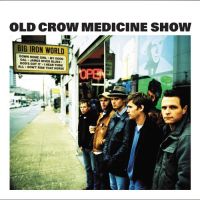
CD REVIEW: Old Crow Medicine Show's "Big Iron World"

Label: Nettwerk Records

On August 29th, 2006, a certain singer/songwriter by the name of Bob Dylan released an album entitled Modern Times. While the album title is largely ironic since nothing is modern about its musical arrangements, the music does not resemble anything like his early folk sound either. So what is the pre-electric Dylan fan supposed to turn to in these “modern times?” Well… how about to another album released on August 29th? Big Iron World by the punky-folky-bluegrass outfit Old Crow Medicine Show is just what the doctor ordered. In many respects a concept album, Big Iron World is a lyrical and musical picture of a harsh, cold world… one that largely contradicts OCMS’ irresistible upbeat sound. Yet, somehow, this combination ultimately proves to be the band’s strongest effort to date.

Produced by the great David Rawlings, the music of Big Iron World is solid. OCMS has always been a musically strong group, and they surely do not disappoint here. Each member of the band delivers, and delivers well. Joined on some tracks by the light drumming of songstress Gillian Welch, the tight-knit group of Critter Fuqua (banjo), Kevin Hayes (guitjo), Morgan Jahnig (bass), Ketch Secor (fiddle), and Willie Watson (guitar) deliver listeners an old-timey sonic blast that is sure to please… and on some occasions, make them want to dance. While their previous two albums were a little more raw and gritty, Big Iron World is OCMS’ most consistently impressive musical record.

In addition to their outstanding musicianship, four members of OCMS contribute lead vocals to songs on the album as well, and all four handle the duty well when called upon. The laid back voice of Critter Fuqua works on both the boatman’s hard time lament “James River Blues” and the lively “New Virginia Creeper,” while the “rocker” of the group, Keith Secor, proves he can be sorrowful as well on the murder tale “My Good Gal.” Even though Kevin Hayes doesn’t have the strongest voice, he still uses it well on a cover of the traditional “Let it Alone.” However, providing the most memorable vocals on the album is guitarist Willie Watson. His haunting, howling vocals on songs like “Don’t Ride That Horse” send chills down one’s spine. A band that has multiple members who can deliver effective lead vocals is rare, but Big Iron World proves that OCMS is one of them.

Yet, what makes this album such a great listen is the cover and original song selection that creates this Big Iron World. Beginning with the twangy, bluesy cover of The Coasters’ “Down Home Girl” and the Dylanesque “Bobcat Tracks,” there is plenty of musical goodness in between for listeners to experience. While many of these songs are fast-paced, they often feature just as much of a dark undertone as the sad and haunting numbers. Some of these are stories of addiction (“Cocaine Habit”), some are stories of infidelity (“Minglewood Blues”), and some are stories of the working man doing what he can to survive (a blistering cover of Woody Guthrie’s “Union Maid”). Hard times define the album, and it is evident that some of the hard times discussed are those that we face today. One of the album’s standouts, “God’s Got It,” sounds like a southern gospel song on the surface, but hints at the irony of wealthy evangelists selling Christianity to the poor. Another very memorable song, “I Hear Them All,” finds OCMS protesting against tyranny in the world in the name of the suffering. In times when such songs are a dime-a-dozen, this is as good as any song of the kind that has been released in recent years, and manages to deliver its political message without bashing listeners over the head with it (are you listening Neil Young??). From start to finish, each song on Big Iron World is a winner.

With all respect to Mr. Dylan, perhaps the greatest musical statement about modern times released on August 29th was Big Iron World. In discussing the darkness around each of us, OCMS has delivered their best album. And in a world where we face the horrors of war, terror, and mediocre noise on mainstream radio, thank heaven for Old Crow Medicine Show!